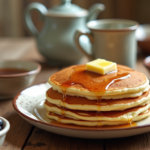
The Best Fluffy Pancakes recipe you will fall in love with. Full of tips and tricks to help you make the best pancakes.
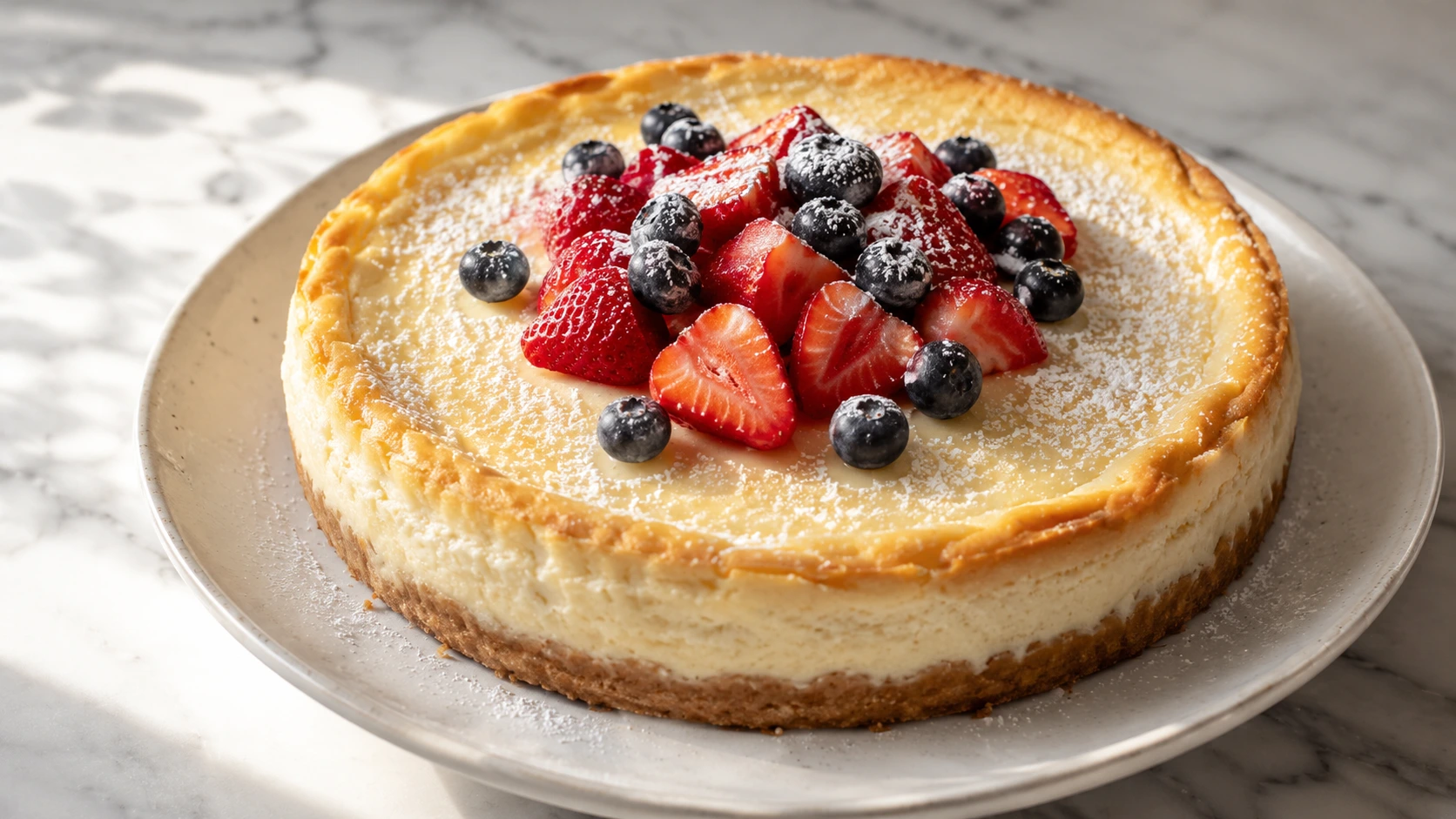
Easy High Protein Cheesecake Recipe (25g+ protein per slice)

Would you agree with me that most of us picture “healthy cheesecake” as something that will either be dry as a cracker, strangely rubbery, or so flavorless that you find yourself wondering why you even bothered stepping away from the real thing?
That was the frustration that got me into the kitchen and — after a few failed batches and one particularly questionable gray-colored filling — I finally cracked it.
This high protein cheesecake is genuinely creamy. It tastes like cheesecake. And it delivers over 25 grams of protein per slice with no chalky taste or weird spongy texture. You get the dessert you actually want, without sacrificing your healthy diet.
It is meal-prep friendly, works as a lower-calorie treat, and I have included a no-bake version so you can make it even on a busy weeknight. Let me show you exactly how it works.
Table of Contents
Recipe at a Glance
| Prep Time | 15 minutes |
| Cook Time | 45 minutes (or 0 for no-bake) |
| Chill Time | 4 hours minimum |
| Total Time | 5 hours |
| Servings | 8 slices |
| Calories per Slice | ~220 kcal |
| Protein per Slice | ~27g |
Why You’ll Love This High Protein Cheesecake
- High protein per slice — around 25 to 30 grams depending on your ingredients
That is real, muscle-supporting protein from whole food sources — not a supplement-heavy shortcut.
- Creamy and rich texture — no rubbery weirdness
The combination of Greek yogurt and cream cheese hits the texture sweet spot. Thick, smooth, and satisfying.
- Easy to customize
You can swap flavors, crusts, protein sources, and sweeteners based on what you have in your kitchen.
- Healthier than traditional cheesecake
Fewer calories, dramatically more protein, and way less sugar — without sacrificing the experience.
- Perfect for dessert or a post-workout snack
Slice it up, put it in jars, make mini bites — this one works in any format.
- Meal prep friendly
Make it on Sunday and you have a high-protein dessert ready for the entire week.
What Makes This Cheesecake High Protein
Here is what separates this from your average cheesecake — and from the dry, sad protein-powder-forward versions you might have seen online.
The protein in this recipe comes from four real food sources working together:
- Greek yogurt — roughly 17g of protein per cup, adds creaminess and tang
- Cottage cheese — blends silky smooth and adds another serious protein punch
- Eggs — bind the filling and contribute about 6g of protein each
- Protein powder (optional) — if you want to push the numbers higher, a scoop of vanilla whey or casein works well; casein in particular gives a denser, creamier set
No single ingredient is carrying all the weight here. That is what makes the texture actually work — you are not drowning the filling in protein powder and hoping for the best.
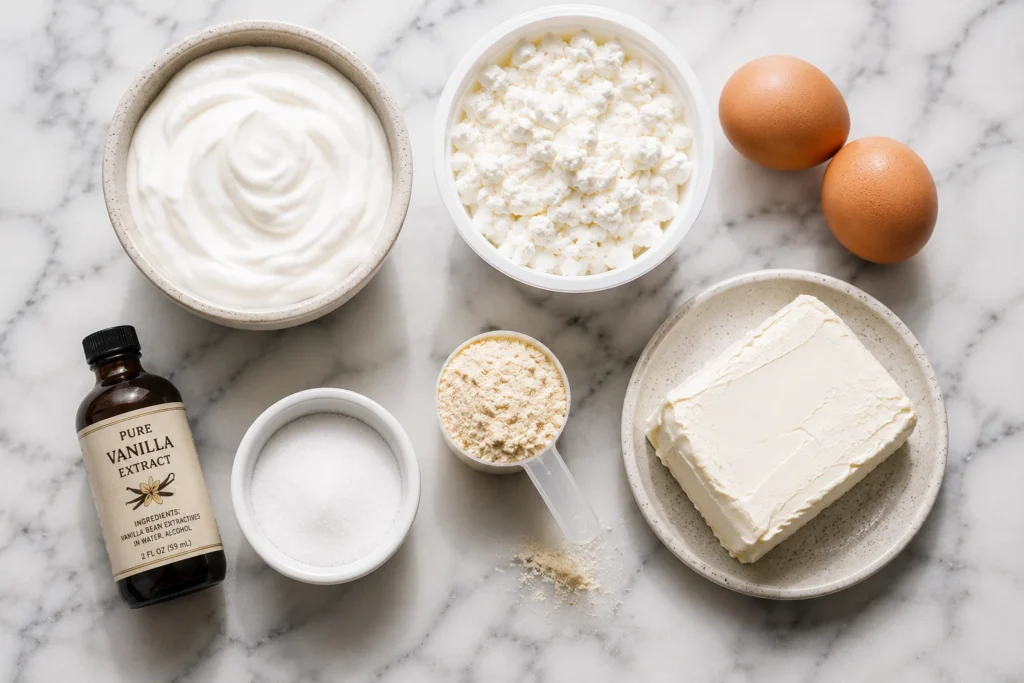
Ingredients
Cheesecake Filling
- 1 cup plain Greek yogurt (full-fat or 2%)
- 8 oz cream cheese, softened
- 1 cup cottage cheese (blend until smooth before adding)
- 2 large eggs
- 1 scoop vanilla protein powder (about 30g — optional but recommended)
- 3 tbsp sweetener of choice (monk fruit, erythritol, or honey)
- 1 tsp pure vanilla extract
- Pinch of salt
Crust Options
- Traditional crust — 1.5 cups graham cracker crumbs + 4 tbsp melted butter + 2 tbsp sweetener
- Low calorie crust — 1 cup almond flour + 2 tbsp coconut oil + 1 tbsp sweetener + pinch of cinnamon
- No crust option — skip it entirely and bake the filling directly; works great for cheesecake jars
Ingredient Substitutions
This is where a lot of people get stuck. The good news: this recipe is incredibly flexible. Here are the main swaps I have tested and trust:
| If You Need… | Swap This | For This |
| No protein powder | Protein powder | Extra Greek yogurt or cottage cheese |
| Dairy-free | Cream cheese | Vegan cream cheese + coconut yogurt |
| No sugar | Regular sweetener | Monk fruit, erythritol, or stevia |
| Gluten-free | Graham cracker crust | Almond flour + melted butter crust |
| Lower fat | Full-fat cream cheese | Reduced-fat cream cheese + more yogurt |
One note on protein powder: if you skip it, simply increase your Greek yogurt or cottage cheese by half a cup. You will lose a few grams of protein per slice but the texture actually gets even creamier. For a high protein cheesecake without protein powder, this is the cleanest move.
How to Make High Protein Cheesecake
Clear steps, no complicated techniques. If you have made a regular cheesecake before, this is easier.
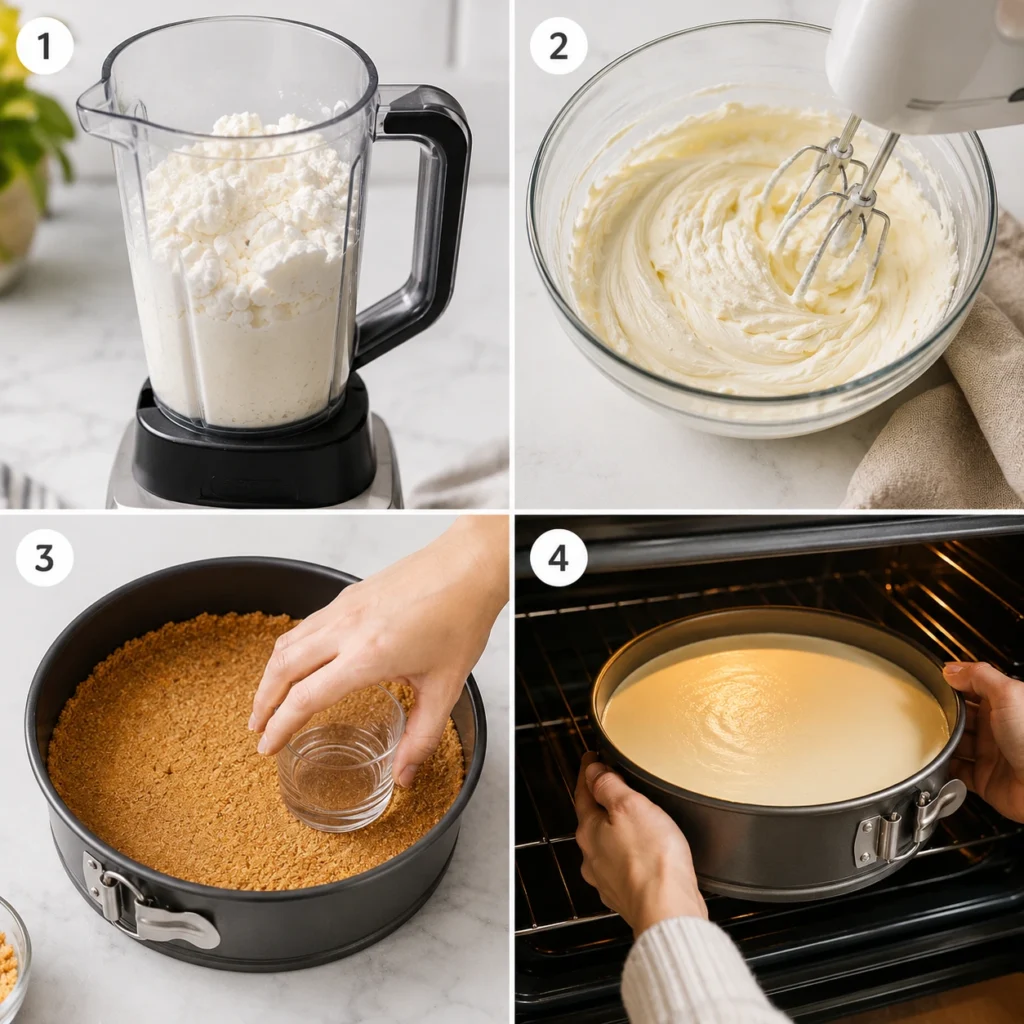
- Preheat your oven to 325°F. Grease a 9-inch springform pan or line individual ramekins with parchment.
- Make the crust. Mix your crust ingredients together and press firmly into the bottom of the pan. Bake for 8 to 10 minutes until lightly golden, then let it cool.
- Blend the cottage cheese. This is important — blend it completely smooth before adding anything else. A blender or food processor works better than a hand mixer here.
- Make the filling. Beat the cream cheese until completely smooth. Add the Greek yogurt, blended cottage cheese, eggs, protein powder, sweetener, vanilla, and salt. Mix until just combined — do not over-mix or you will incorporate too much air and risk cracks.
- Pour the filling over the cooled crust. Smooth the top.
- Bake at 325°F for 40 to 48 minutes. The edges should be set but the center should have a slight jiggle — like Jell-O, not liquid.
- Turn off the oven and let the cheesecake sit inside with the door cracked for 1 hour. This slow cooling is your best defense against cracks.
- Refrigerate for at least 4 hours, ideally overnight.
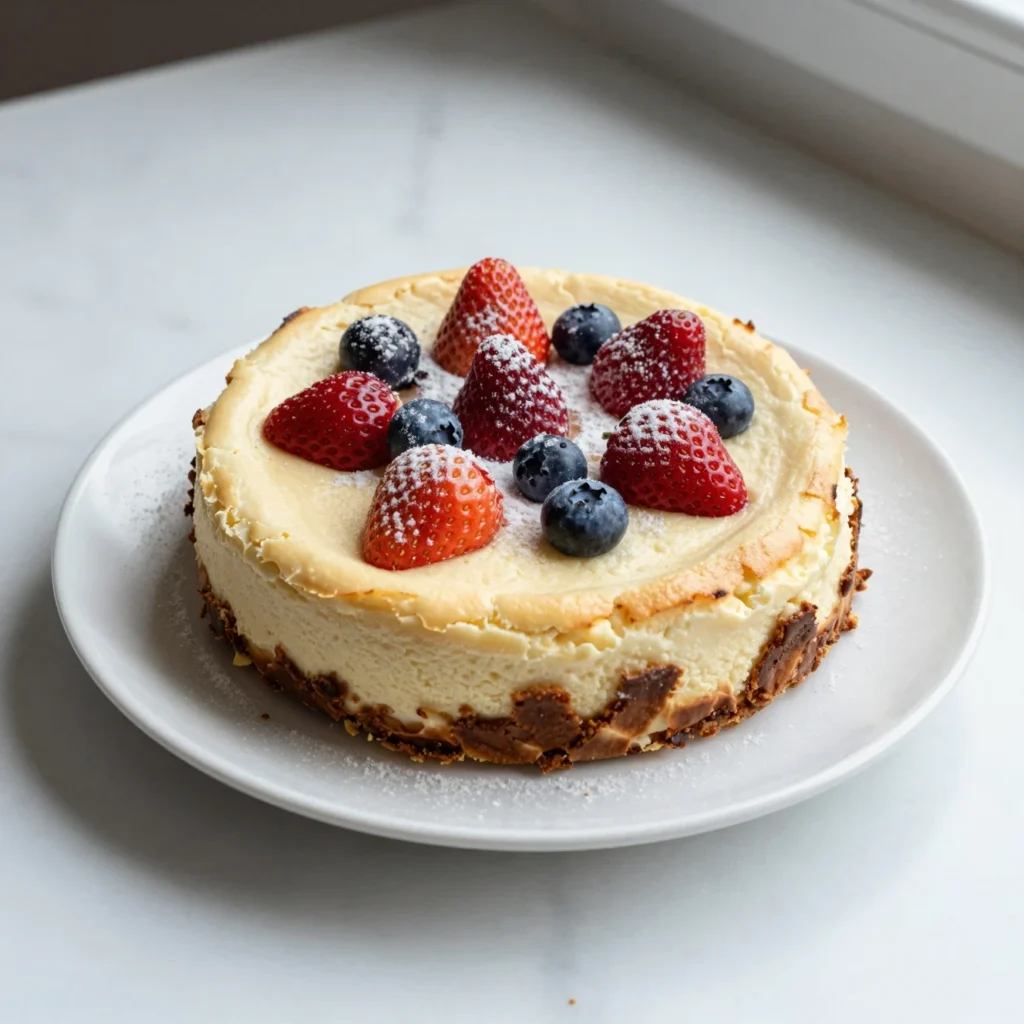
If you’re into healthy desserts, these high protein recipes are worth a try.
No Bake High Protein Cheesecake
No oven? No problem. The no-bake version skips the eggs and uses gelatin (or agar agar) to set the filling instead.
What changes:
- Remove the eggs from the filling
- Add 1 tsp unflavored gelatin (or agar agar), bloomed in 2 tbsp cold water, then dissolved in a small amount of warm liquid
- Stir into the filling before pouring into your crust or jars
- Refrigerate for a minimum of 6 hours, ideally overnight
Texture expectations: the no-bake version is a little lighter and mousse-like compared to the baked version. It is less dense but still incredibly creamy and satisfying. For high protein cheesecake jars specifically, the no-bake method is the way to go — just layer the filling over crushed graham crackers in mason jars, chill, and done.
Flavor Variations
Once you have the base recipe down, the variations are where it gets fun.
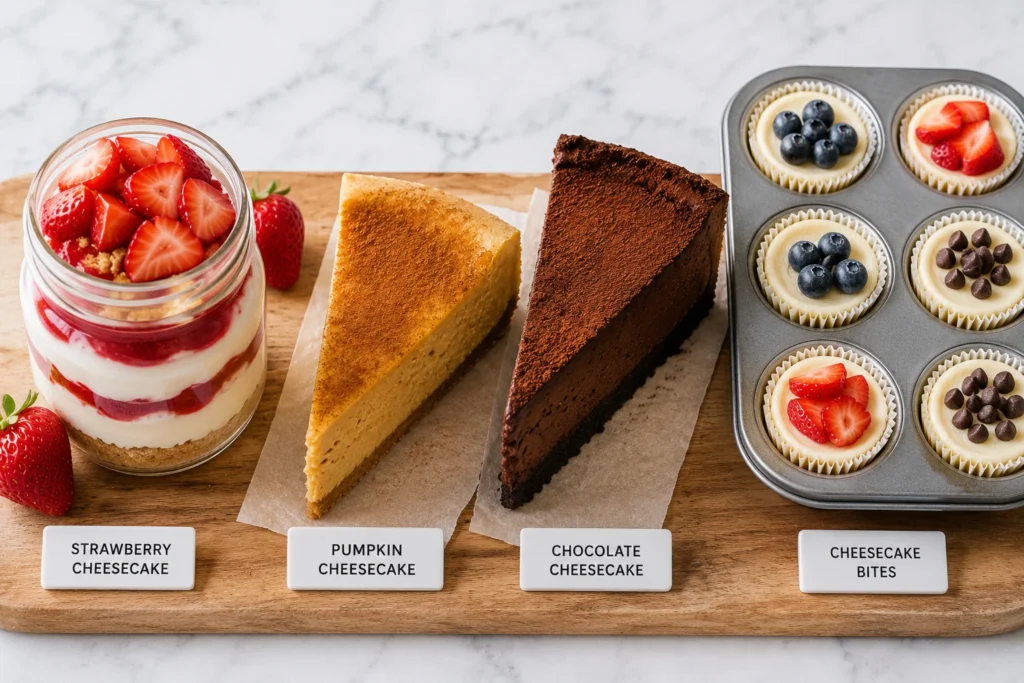
Chocolate High Protein Cheesecake
Add 2 tbsp unsweetened cocoa powder and an extra tablespoon of sweetener to the filling. A few drops of espresso intensify the chocolate flavor dramatically.
High Protein Strawberry Cheesecake Jars
Make the no-bake filling, layer it in jars over a crushed graham cracker base, and top with fresh macerated strawberries. These are meal-prep gold.
High Protein Cottage Cheese Cheesecake
Double the cottage cheese and cut the cream cheese in half. The result is tangier, lighter, and even higher in protein. Great for those avoiding heavy cream cheese.
High Protein Pumpkin Cheesecake
Add half a cup of pure pumpkin puree, a teaspoon of pumpkin pie spice, and a touch of cinnamon to the base filling. Fall perfection.
Mini Cheesecake Bites and Cups
Use a muffin tin lined with paper cups. Divide the crust and filling evenly — they bake faster (about 20 to 25 minutes) and are perfectly portioned for meal prep.
Lemon Protein Cheesecake
Add two tablespoons of fresh lemon juice and a teaspoon of lemon zest to the filling. Bright, tangy, and refreshing.
Protein & Nutrition Breakdown
Let me show you exactly how this stacks up against a regular slice from your local bakery.
| Nutrient | Regular Cheesecake | High Protein Cheesecake |
| Calories | ~400 kcal | ~220 kcal |
| Protein | ~6g | ~25–30g |
| Carbs | ~35g | ~12–18g |
| Fat | ~28g | ~8–12g |
| Sugar | ~22g | ~4–8g |
Numbers are approximate and will vary based on your specific ingredients and portion size. Using full-fat dairy and a scoop of whey protein puts you closer to the 27-30g range per slice. Skipping the protein powder and using low-fat options brings it down to around 18-22g — still impressive for a dessert.
Texture Tips: How to Get It Perfectly Creamy
This is where most protein cheesecake recipes fall apart — and honestly, where I spent the most time testing. Here is everything I know:
- Blend your cottage cheese completely smooth. Any lumps left in the cottage cheese will show up in the final texture. Use a blender, not a hand mixer.
- Do not over-mix the filling. Once your eggs go in, mix on low speed and stop as soon as everything is combined. Over-mixing = cracks.
- Room temperature ingredients. Cold cream cheese gives you lumps. Let everything sit out for 30 minutes before you start.
- For protein powder, casein > whey. Whey can make the filling slightly grainy or cause it to tighten up during baking. Casein dissolves better and gives a denser, creamier result. If you only have whey, that is fine — just use a vanilla flavored one and reduce slightly.
- The jiggle test is your friend. The center should wobble gently when you shake the pan. If it looks completely solid, it is already overbaked.
- Slow cooling prevents cracks. Turn off the oven, crack the door, and let the cheesecake cool inside for a full hour before you take it out. Drastic temperature changes cause cracking.
- Chill overnight for best texture. Four hours minimum. Overnight is ideal. The flavors also deepen significantly after 24 hours in the fridge.
Serving Ideas
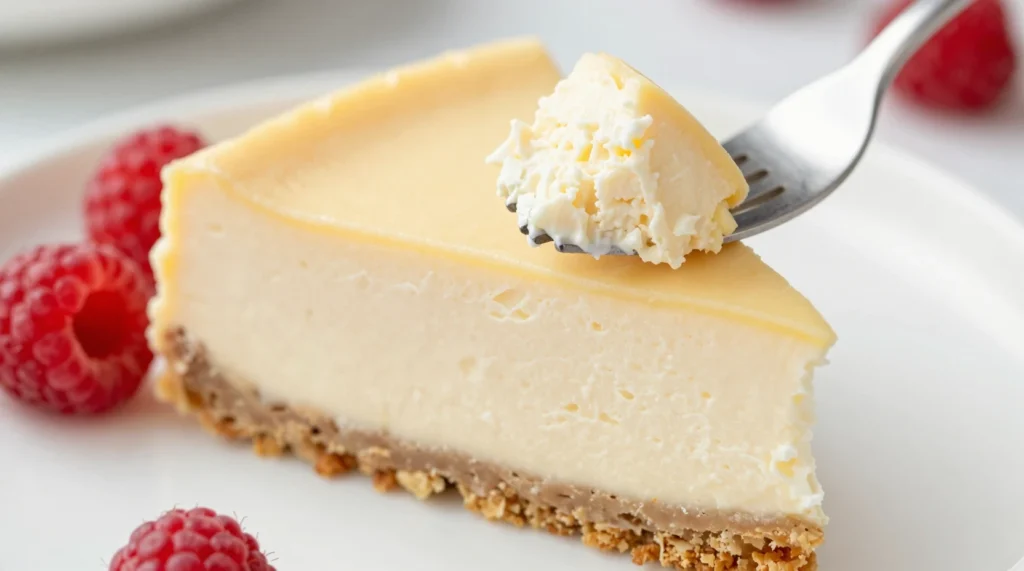
- Classic slice with fresh berries and a light dusting of powdered sweetener
- Post-workout: a slice straight from the fridge with a scoop of Greek yogurt on the side
- Cheesecake cups in mason jars — great for meal prepping individual servings
- Topped with a warm berry compote (microwave frozen berries with a little sweetener)
- Drizzled with a small amount of dark chocolate or a tablespoon of nut butter
Storage & Meal Prep
- Fridge: store covered for up to 5 days. The texture actually improves on day 2 and 3.
- Freezing: yes, this freezes well. Wrap individual slices tightly in plastic wrap, then place in a zip-lock bag. Freeze for up to 2 months. Thaw overnight in the fridge.
- Best containers: airtight glass containers or individual mason jars for the no-bake version.
- Meal prep tip: bake on Sunday, slice and store individually. You have a high-protein dessert or snack ready for the whole week with zero extra effort.
Frequently Asked Questions
Is high protein cheesecake healthy?
Yes, significantly more so than traditional cheesecake. It is lower in calories, much higher in protein, and uses ingredients like Greek yogurt and cottage cheese that provide real nutritional value. It is not a diet food per se, but it is a genuinely smart swap for anyone tracking macros or trying to increase their protein intake.
Can I make cheesecake without protein powder?
Absolutely. Simply increase the Greek yogurt or cottage cheese by about half a cup to compensate. You will lose a few grams of protein per slice but the texture is often even better without it.
Why is my protein cheesecake grainy?
Most commonly this comes from two things: cottage cheese that was not fully blended before adding to the filling, or protein powder (usually whey) that did not dissolve properly. Blend your cottage cheese completely smooth and consider switching to casein protein or skipping it altogether.
Can I freeze protein cheesecake?
Yes. Wrap slices individually in plastic wrap and freeze for up to 2 months. Thaw overnight in the refrigerator. The texture holds up well, though the no-bake version is slightly more delicate after freezing.
What protein powder works best in cheesecake?
Casein protein is the winner here. It has a thicker, denser consistency that works with the creamy filling and does not make it grainy. Vanilla flavored casein is the most versatile. If you only have whey, use it — just expect a slightly lighter texture.
How much protein is in each slice?
Using the base recipe with protein powder, each of 8 slices has approximately 25 to 30 grams of protein. Without protein powder, you are looking at 18 to 22 grams. Still well above any traditional cheesecake.
Can I make this no bake?
Yes. Remove the eggs and add bloomed gelatin or agar agar as a setting agent. Refrigerate for at least 6 hours. The texture is lighter and more mousse-like, which works especially well for cheesecake jars and individual cups.
Can diabetics eat this cheesecake?
This recipe is much more diabetes-friendly than traditional cheesecake thanks to its low sugar content and high protein, which helps manage blood glucose response. That said, individual responses vary, and anyone managing diabetes should consult their doctor or dietitian before making significant dietary changes.
Final Thoughts
Here is the thing about healthy desserts: they only work if you actually want to eat them. A recipe that hits your nutrition goals but tastes like a compromise isn’t a real win.
This high protein cheesecake asks nothing of you in the way of compromise. It’s creamy, rich, has that real cheesecake flavor, and at the same time delivers a solid protein boost in every slice. And all the variations of the recipe work out every single time.
Give it a try this weekend. And if you end up making the strawberry cheesecake jars for meal prep, you will probably never go back to buying overpriced protein bars again.
Tried this recipe? Drop a comment below and let me know how it went. And if you found this helpful, sharing it with others makes a big difference.
High Protein Cheesecake
A thick, creamy high protein cheesecake made with Greek yogurt, cottage cheese, and cream cheese. Over 25g of protein per slice, lower in calories than traditional cheesecake, and easy enough for any home cook. Baked and no-bake versions included.
Ingredients
Equipment
Method
- Preheat the ovenPreheat your oven to 325°F. Grease a 9-inch springform pan or line individual ramekins with parchment paper.
- Make the crustMix your crust ingredients together and press firmly into the bottom of the pan. Bake for 8 to 10 minutes until lightly golden. Let it cool completely.
- Blend the cottage cheeseAdd the cottage cheese to a blender or food processor and blend until completely smooth. No lumps.
- Make the fillingBeat the softened cream cheese until smooth. Add the Greek yogurt, blended cottage cheese, eggs, protein powder, sweetener, vanilla extract, and salt. Mix on low until just combined. Do not over-mix.
- AssemblePour the filling over the cooled crust and smooth the top with a spatula.
- BakeBake at 325°F for 40 to 48 minutes. The edges should be set and the center should have a slight jiggle.
- Cool slowlyTurn off the oven, crack the door open, and let the cheesecake sit inside for 1 hour. This prevents cracks.
- ChillRefrigerate for a minimum of 4 hours, ideally overnight, before slicing and serving.
Notes
- Blend the cottage cheese completely smooth before adding to the filling — this is the key to a creamy, lump-free texture.
- Casein protein powder works better than whey in this recipe. It dissolves smoother and gives a denser, creamier result.
- Let all dairy ingredients reach room temperature before mixing to avoid lumps.
- For the no-bake version, remove the eggs and add 1 tsp bloomed gelatin. Chill for at least 6 hours.
- Cheesecake keeps in the fridge for up to 5 days and freezes well for up to 2 months.
Nutrition (Per Serving / 1 Slice)
| Nutrient | Amount |
|---|---|
| Calories | 220 kcal |
| Protein | 27 g |
| Carbohydrates | 15 g |
| Fat | 10 g |
| Saturated Fat | 5 g |
| Cholesterol | 85 mg |
| Sodium | 310 mg |
| Fiber | 0.5 g |
| Sugar | 6 g |
Do not rush the chilling time. The texture goes from good to genuinely great after a full night in the fridge — the filling firms up, the flavors deepen, and every slice comes out clean.